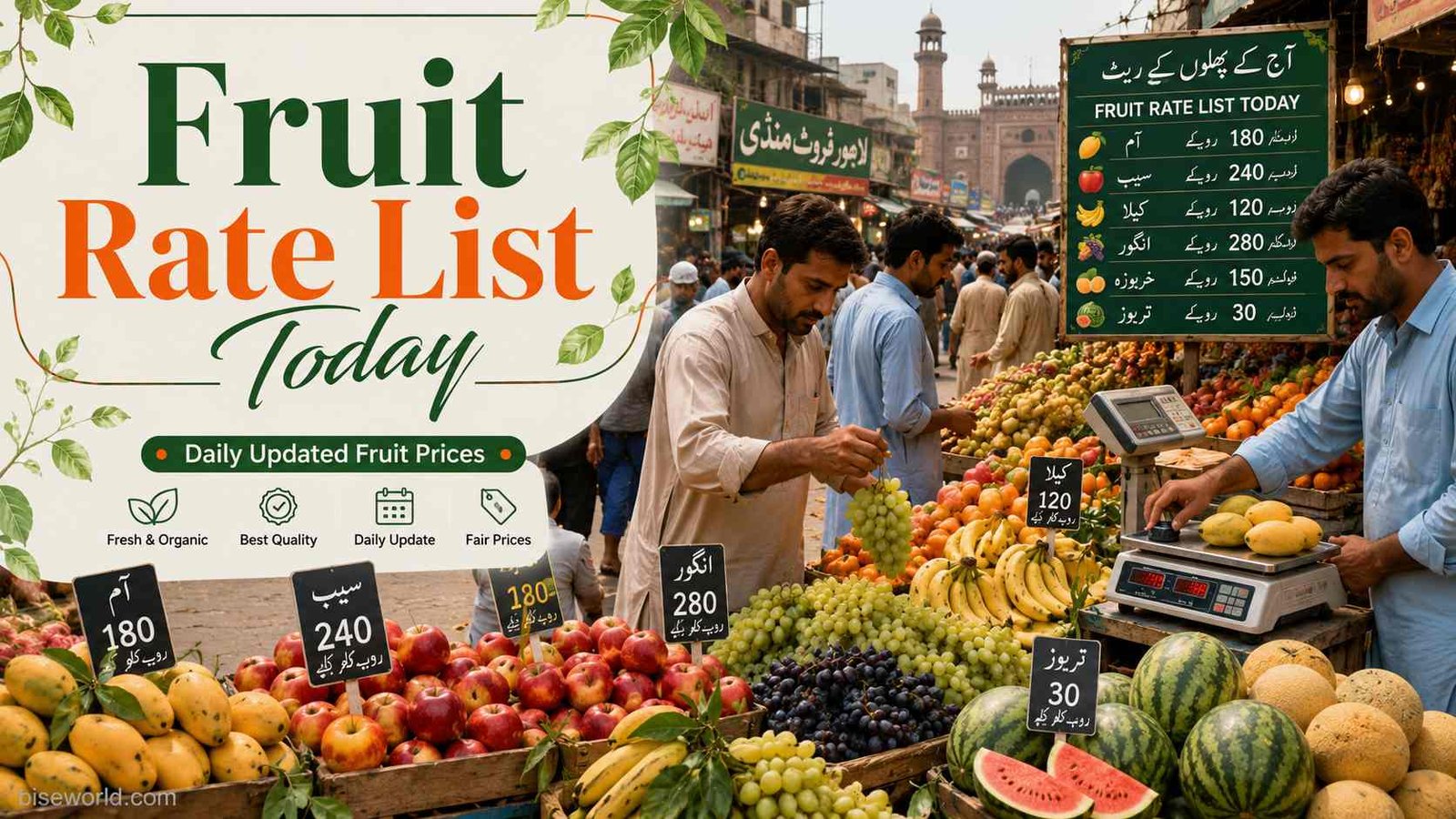
According to recent market reporting from Punjab Agriculture Marketing Information Service (AMIS), Lahore fruit markets, and Karachi wholesale traders, local seasonal fruits remain more affordable than imported stock. Mangoes, bananas, watermelon, melon, and guava continue to dominate daily household buying because they cost less per kilogram compared to cherries, imported apples, kiwi, and grapes.
The biggest mistake buyers make is assuming one city rate applies everywhere. Fruit prices in Pakistan vary heavily between:
- Wholesale mandi
- Retail shop
- Supermarket
- Online grocery platforms
- Imported vs local supply
That difference becomes very noticeable during mango season and before Eid periods.
What Are Fruits Prices in Pakistan Today?
Here are commonly reported retail market ranges from major Pakistani cities including Lahore, Karachi, Faisalabad, Rawalpindi, and Multan. Prices may shift daily depending on quality and supply.
These are observed retail estimates from open markets and urban stores. Wholesale mandi rates remain lower, especially for bulk buyers and retailers.
Punjab AMIS and district market committees regularly publish commodity pricing updates for agricultural markets across Pakistan. Recent reporting also shows transport costs and fuel adjustments affecting retail fruit prices in urban centers.
Which Fruits Have the Highest Prices in Pakistan Right Now?
Imported fruits still hold the highest prices in Pakistan. Kiwi, imported grapes, cherries, and premium apples from Washington, Iran, or China often become luxury purchases for many families.
Cherries remain among the most expensive fruits because Pakistan has limited local production and short seasonal availability. In cities like Islamabad and Lahore, fresh cherries can cross Rs. 2000 per kilogram during early arrivals.
Imported apples also remain expensive because:
- Dollar exchange rates affect imports
- Cold storage costs increase prices
- Transport and customs charges raise retail rates
Premium mango varieties can also temporarily become expensive at the beginning of the season. Early Chaunsa and Anwar Ratol arrivals often sell at premium rates before supply improves.
Some supermarkets also charge significantly higher prices than local fruit stalls. Many buyers unknowingly pay 20% to 40% more simply because of packaging and air-conditioned retail environments.
What Is the Price of 1 Kg Mango in Pakistan?
Mango prices depend heavily on:
- Variety
- City
- Arrival timing
- Quality grade
- Wholesale supply
Current market observations show:
- Sindhri mangoes remain cheaper because of wider supply
- Chaunsa prices stay higher due to stronger demand
- Anwar Ratol often becomes premium-priced because of smaller production volumes
In many Lahore and Karachi markets:
- Normal-quality Sindhri sells between Rs. 180 and Rs. 300
- Chaunsa ranges between Rs. 250 and Rs. 450
- Premium gift-quality mango boxes cost much more
The first few weeks of mango season always bring unstable pricing. Traders test market demand before supply becomes steady.
Another important factor is heat damage. Extreme temperatures can reduce shelf life, forcing vendors to either sell quickly at lower prices or lose stock entirely.
How Do Sindhri, Chaunsa, and Anwar Ratol Prices Differ?
Sindhri mangoes usually enter markets earlier. Their larger supply keeps prices relatively controlled.
Chaunsa mangoes gain stronger national demand because many people prefer their sweeter taste and softer texture. Export demand also pushes prices upward.
Anwar Ratol often becomes expensive because:
- Production quantity is smaller
- Shelf life is shorter
- Demand remains strong in urban markets
Export-quality mangoes also create local price pressure. When exporters buy large quantities, domestic retail prices can rise quickly.
Which Cities Have Lower Mango Rates?
Multan, Rahim Yar Khan, Bahawalpur, and interior Sindh often report lower wholesale mango prices because these areas remain closer to production zones.
Karachi sometimes receives competitive rates because of strong supply movement from Sindh orchards. However, retail shops in wealthy areas still charge premium margins.
Islamabad and northern areas usually show higher mango rates due to:
- Transport distance
- Cold-chain handling
- Lower local supply
Consumers who buy directly from wholesale mandis can save noticeable amounts during peak season.
Which Fruits Are Cheapest in Pakistan Markets?
Bananas, watermelon, and melon usually remain among the cheapest fruits in Pakistan during summer months.
These fruits stay affordable because:
- Local production volume remains high
- Transport is easier
- Shelf life management costs less
- Demand spreads across all income groups
Watermelon prices can drop sharply when supply increases during peak summer weeks. Some wholesale markets even see prices fall below transportation expectations during oversupply periods.
Bananas also remain a daily-use fruit because they are available year-round and accessible to lower-income households.
Why Do Seasonal Fruits Become Affordable?
Seasonal supply changes everything in Pakistan’s fruit markets.
When orchards across Punjab and Sindh begin full harvesting:
- Market arrivals increase rapidly
- Competition between traders rises
- Storage pressure forces faster selling
- Retail prices soften
But imported fruits do not follow the same pattern. Their prices remain tied to currency exchange rates and import costs.
That is why locally grown fruits almost always become the better value option for average Pakistani families.
How Do Fruit Prices Change Between Mandi and Retail Markets?
Many people get confused after seeing mandi prices online because local shop rates are much higher.
That difference comes from:
- Transport costs
- Fruit damage during delivery
- Shop rent
- Ice and storage expenses
- Vendor profit margins
For example:
A fruit selling for Rs. 180 in a wholesale mandi may appear at Rs. 260 or more in retail markets within the same city.
Supermarkets add even more markup because they:
- Sort fruits by appearance
- Use packaging
- Operate air-conditioned stores
- Absorb higher business costs
Buyers comparing rates should always understand whether the price refers to:
- Wholesale mandi
- Open retail market
- Grocery chain
- Imported packaged stock
What Affects Daily Fruit Rates in Pakistan?
Fruit prices shift quickly because Pakistan’s agriculture market depends heavily on weather and transportation.
The biggest pricing factors include:
- Heatwaves
- Rain damage
- Fuel prices
- Crop disease
- Import taxes
- Highway transport conditions
- Supply interruptions
A single transport disruption between Sindh and Punjab can temporarily raise fruit rates in northern cities.
Fuel price increases also affect fruit transportation immediately because fruits require fast movement to avoid spoilage.
Why Do Lahore, Karachi, and Islamabad Prices Differ?
Karachi operates as a major import and distribution hub. Imported fruits often arrive there first before moving toward Punjab and northern cities.
Lahore benefits from strong Punjab agricultural connectivity, especially for mangoes, guava, and citrus.
Islamabad usually shows higher retail fruit prices because:
- Supply routes are longer
- Urban retail costs remain high
- Premium grocery demand is stronger
That difference becomes even larger for imported fruits and cherries.
Which Fruits Are Commonly Sold Across Pakistan?
Pakistan’s most widely available fruits include:
- Mango
- Banana
- Apple
- Guava
- Watermelon
- Melon
- Orange
- Grapes
- Peach
- Pomegranate
Seasonal availability changes buying patterns heavily. Summer dominates mangoes and melons, while winter strengthens citrus markets.
Punjab Agriculture Marketing Information Service and district market committees continue publishing regular agricultural commodity pricing updates used by traders and retailers.
What Should Buyers Check Before Paying High Fruit Prices?
Many consumers focus only on appearance and ignore quality indicators.
Before buying expensive fruit, check:
- Ripeness
- Smell
- Soft spots
- Storage condition
- Imported labeling
- Seasonal availability
Very shiny fruit sometimes indicates excessive polishing or long cold storage handling.
Another common mistake involves buying early-season fruit at inflated rates. Prices often stabilize after wider market arrivals within a few weeks.
What Can Consumers Expect In Coming Weeks?
Mango prices may continue softening as larger harvest volumes arrive from Punjab regions.
Watermelon and melon rates may remain affordable if weather conditions stay stable.
Imported fruit prices may stay high because:
- Currency pressure continues
- Import costs remain unstable
- Premium retail demand still exists
Local seasonal fruits will likely remain the better value option for most households across Pakistan.
People checking fruit prices daily should rely on mandi updates, district market committees, and nearby wholesale markets instead of assuming social media rate lists apply nationally.

Zeshan Akram is a senior social and educational content analyst with a Master’s degree in Sociology. He specializes in Islamic topics, public schemes, and prices, explaining policies with cultural context and verified public information.