
One of the most neglected parts of this process is Azan ke baad ki dua. Many people hear the Azan, some repeat the words, but very few pause afterward to recite the dua that the Prophet ﷺ himself taught. This short supplication carries a promise, a meaning, and a connection that goes beyond habit.
Let me explain what this dua is, where it comes from, and why it matters so much in Sunni Islamic practice.
What Is Azan Ke Baad Ki Dua?
Azan ke baad ki dua is a supplication recited immediately after the call to prayer ends. It is not a cultural addition or later invention. It is firmly rooted in authentic hadees and has been practiced by Muslims for centuries.
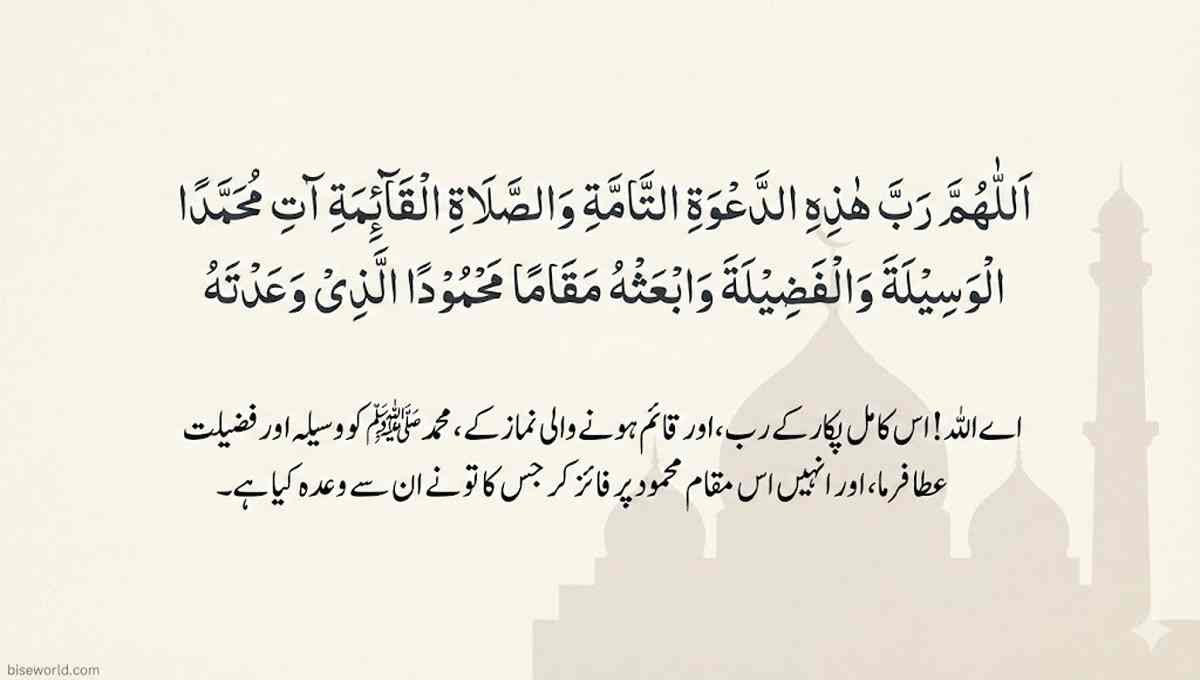
The dua asks Allah to grant the Prophet Muhammad ﷺ Al-Waseelah, Al-Fazilah, and the honored station Maqam-e-Mahmood that Allah promised him. In simple terms, it is a prayer that recognizes the status of the Prophet ﷺ and affirms belief in Allah’s promise.
This is not a long or complicated prayer. It is short, precise, and rich in meaning. Its power lies in consistency and intention, not length.
Authentic Arabic Text of Azan Ke Baad Ki Dua
اَللّٰهُمَّ رَبَّ هٰذِهِ الدَّعْوَةِ التَّامَّةِ وَالصَّلَاةِ الْقَائِمَةِ، اٰتِ مُحَمَّدًا الْوَسِيلَةَ وَالْفَضِيلَةَ، وَابْعَثْهُ مَقَامًا مَّحْمُودًا الَّذِي وَعَدْتَّهُ
This is the wording reported in authentic Sunni collections and widely accepted by scholars across schools of thought.
Urdu Translation
اے اللہ! اس کامل دعوت اور قائم ہونے والی نماز کے رب، محمد ﷺ کو وسیلہ اور فضیلت عطا فرما، اور انہیں اس مقامِ محمود تک پہنچا جس کا تو نے ان سے وعدہ فرمایا ہے۔
The Urdu translation makes something very clear. This dua is not about personal requests. It is about acknowledgment, belief, and respect.

English Meaning
O Allah, Lord of this perfect call and the prayer to be established, grant Muhammad the means and the excellence, and raise him to the praised station You have promised him.
The language is direct. No symbolism. No exaggeration. Just faith, clarity, and trust in Allah’s promise.
What the Hadees Says About This Dua
The Prophet ﷺ clearly instructed the Ummah to recite this dua after Azan. He also mentioned a reward that many people overlook.
Whoever recites this supplication sincerely after the Azan becomes deserving of the Prophet’s intercession on the Day of Judgment.
This is not a small promise. In Islamic belief, Shafa‘ah is among the greatest hopes of a believer. The fact that such a short dua is connected to it shows Allah’s mercy and generosity.
Why Listening to Azan Properly Matters
Islam does not treat Azan as background sound. It is not meant to play while conversations continue or phones are checked.
The proper adab is simple:
Pause what you are doing
Listen attentively
Repeat the words of the Mu’adhin
Send durood upon the Prophet ﷺ
Recite Azan ke baad ki dua
This sequence turns a routine moment into worship.
Many people ask whether it is sinful not to recite the dua. Scholars clarify that while the dua is not obligatory in the legal sense, neglecting it regularly is a loss, not a neutral choice. The reward attached to it makes it spiritually significant.
The Deeper Meaning Behind the Words
This dua teaches three things at once.
First, it affirms Tawheed. By addressing Allah as the Lord of the call and the prayer, it places all authority with Him.
Second, it affirms Risalat. By asking for honor and elevation for the Prophet ﷺ, it recognizes his role as Allah’s Messenger.
Third, it affirms belief in the Hereafter. The mention of Maqam-e-Mahmood points directly to the Day of Judgment and accountability.
Few supplications carry all three core beliefs in such a compact form.
Fazilat of Azan Ke Baad Ki Dua
The virtues of this dua are not exaggerated stories or cultural claims. They are based on clear prophetic guidance.
It strengthens connection with the Prophet ﷺ
It earns eligibility for intercession
It reminds the believer of prayer before prayer even begins
It creates a pause between worldly activity and worship
Over time, this pause changes behavior. People who take Azan seriously tend to take prayer seriously. And people who take prayer seriously shape their lives differently.
Using Images of Azan Ke Baad Ki Dua
Many Muslims prefer visual reminders. A properly designed image with Arabic text helps with memorization and consistency.
Downloading Azan ke baad ki dua images serves a simple purpose:
You see it daily
You remember to recite it
Children learn it naturally
Homes reflect Islamic identity
That said, images should be treated with respect. They should not be placed in inappropriate locations or treated as decoration without meaning.
About PDFs and Online Downloads
Some people search for “Azan ke baad ki dua PDF” hoping for authenticity. A practical reminder here matters.
No PDF or image replaces understanding. Downloading is useful only if it leads to recitation and reflection. The dua itself does not gain value from format. Its value comes from sincerity.
If you store it on your phone, treat it as a reminder, not a file saved and forgotten.
Common Mistakes People Make
Over the years, a few patterns appear repeatedly.
Some people rush straight into talking after Azan.
Some repeat the Azan words but skip the dua.
Some recite incorrect wording due to memory errors.
Some treat the dua as optional noise rather than worship.
None of these come from bad intention. They come from lack of awareness. Once awareness improves, practice usually follows.
Why This Practice Needs Revival
In many Muslim societies, religious habits survive but their meanings fade. Azan ke baad ki dua is a clear example.
It takes less than 20 seconds.
It costs nothing.
It carries a reward tied to the Hereafter.
Yet it is one of the most skipped sunnahs in daily life.
Reviving it does not require speeches or campaigns. It requires individuals choosing consistency.
A Final Reflection
Azan announces that success lies in prayer. The dua after it quietly confirms that success lies in following guidance.
Between those two moments, a believer chooses how seriously faith fits into daily life.
If something so small connects a person to such a great promise, ignoring it makes little sense.
The next time you hear the Azan, pause. Listen. Respond. Then recite the dua with understanding.
That short moment may carry more weight than many long actions done without awareness

Zeshan Akram is a senior social and educational content analyst with a Master’s degree in Sociology. He specializes in Islamic topics, public schemes, and prices, explaining policies with cultural context and verified public information.