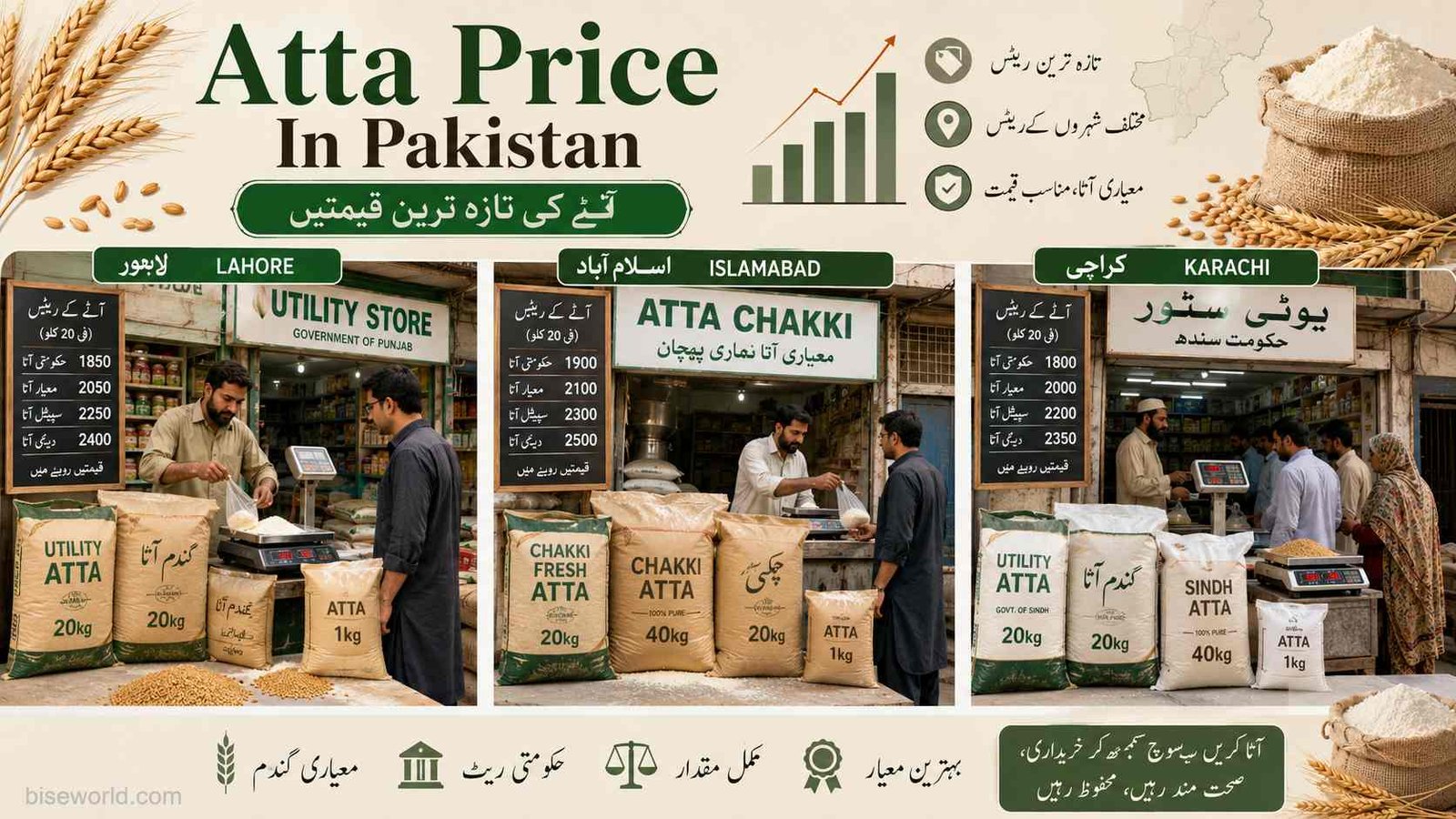
People searching for atta prices are not only comparing rates anymore. Many families now check city-wise differences before monthly grocery shopping because even a Rs150–200 increase affects household budgets quickly.
The biggest confusion right now comes from mixed prices online. Some websites still show old subsidized government rates, while actual market prices in shops and flour mills have already moved higher after wheat prices increased in Punjab and Sindh.
Why Have Atta Prices Increased Across Pakistan Recently?
The main reason is the increase in wheat prices across open markets. Flour mills in Punjab and other provinces argued that earlier government-notified rates were no longer possible after wheat crossed Rs3,500 to Rs4,000 per maund in several markets.
Another factor is the reduction in subsidized wheat supply. Earlier, some mills received wheat from official stocks at lower rates. Once that support reduced, mills shifted retail prices upward.
Karachi remains the most expensive city because transport costs, port-area logistics, storage expenses, and retail margins are higher there compared to Lahore. Islamabad prices also remain elevated due to supply chain and demand pressure.
What Is the 1kg Atta Price in Lahore, Islamabad, and Karachi?
At retail shops and local grocery stores, 1kg flour prices currently vary between Rs120 and Rs170 depending on whether buyers choose regular atta, chakki atta, or branded flour.
Here is the current city-wise market range based on recent market reporting and retail observations:
| City | Estimated 1kg Atta Price |
|---|---|
| Lahore | Rs120–140 |
| Islamabad | Rs145–165 |
| Karachi | Rs150–170 |
Branded flour usually costs more than open loose atta sold at local chakki shops. Families purchasing directly from mills sometimes get slightly lower rates, especially for bulk purchases.
Consumers should also understand that “atta” is not priced equally across all areas inside one city. DHA, Bahria Town, Clifton, Gulberg, and other high-income areas often show higher retail pricing compared to wholesale markets.
What Is the 20kg Atta Price in Pakistan Today?
The 20kg flour bag has become the main benchmark for comparing inflation across cities because most households purchase this size for monthly use.
According to PBS-linked reporting and market coverage:
| City | 20kg Atta Price |
|---|---|
| Lahore | Around Rs1,810–2,100 |
| Islamabad | Around Rs2,350–2,373 |
| Karachi | Around Rs2,500 |
| Hyderabad | Around Rs2,440 |
| Rawalpindi | Around Rs2,347 |
Punjab authorities recently accepted revised flour rates after disagreements between flour mills and the Food Directorate. New approved rates placed a 20kg flour bag around Rs2,050 in several Punjab markets.
Still, actual shop prices can move higher depending on transportation and local demand.
What Is the 40kg Atta Price in Pakistan Today?
The 40kg rate matters more for restaurants, tandoors, bakeries, and large families.
Current wholesale-based estimates place 40kg wheat flour bags between:
| Type | Estimated 40kg Price |
|---|---|
| Regular Market Atta | Rs3,900–4,400 |
| Premium Chakki Atta | Rs4,500–5,200 |
These figures vary significantly by province and wheat quality. Karachi and Quetta continue to report higher pricing compared to Lahore and central Punjab.
Many online sources still show older government-subsidy numbers. Buyers should confirm rates directly from nearby wholesale dealers or flour mills before purchasing in bulk.
Which Types of Flour Are Commonly Sold in Pakistan?
People often compare prices without understanding flour categories.
Regular atta is the standard flour used for roti in most homes. It is cheaper and widely available.
Chakki atta comes from stone grinding methods and usually contains more wheat bran. Many families prefer it for taste and texture, but it costs more.
Fine flour or maida is different from regular atta. Bakeries and restaurants mostly use it for naan, bakery products, and fast food preparation.
Branded flour from companies like Sunridge, Bake Parlor, Mughal, and others also costs more because of packaging, marketing, and processing standards.
Where Are People Buying Cheaper Atta in Major Cities?
Many buyers are now shifting away from small convenience stores because the price difference has become noticeable.
People are mainly purchasing from:
• Utility Stores when stock is available
• Local flour chakki shops
• Wholesale grain markets
• Direct flour mill distributors
• Metro and large cash-and-carry chains
However, cheaper atta does not always mean better quality. Some low-cost flour contains mixed grain quality or inconsistent grinding.
What Should Buyers Check Before Purchasing Flour?
Several families now complain about flour quality changing even when the packaging looks identical.
Before buying, check:
• Manufacturing and packing date
• Wheat smell and texture
• Presence of insects or moisture
• Weight accuracy on packaged bags
• Whether the product is chakki or fine flour
This matters more during inflation periods because some sellers reduce quality while keeping prices high.
How Are Official Wheat Policies Affecting Atta Prices?
Government wheat release policies directly affect flour rates.
When provincial governments provide subsidized wheat to flour mills, retail atta prices remain relatively controlled. Once open-market wheat becomes dominant, flour prices quickly rise.
Recent disputes between flour mills and Punjab authorities showed how sensitive the market has become. Mill owners argued that selling atta at older official prices was financially impossible after wheat prices increased sharply.
The Pakistan Bureau of Statistics continues monitoring weekly flour prices across major cities, and current reports still show Karachi as the most expensive market in the country.
What Should Families Expect in Coming Weeks?
Atta prices may remain unstable during the coming weeks because wheat procurement, transportation costs, and government policy decisions are still changing.
If wheat prices continue rising in open markets, flour prices may increase further, especially in urban areas like Karachi and Islamabad. If provincial authorities restart broader wheat support or release additional stock, prices could stabilize temporarily.
Families depending on monthly bulk purchases should compare rates carefully instead of relying on old social media screenshots or outdated subsidy announcements.
What should you do next?
Before buying a 20kg or 40kg atta bag, compare at least two local markets and confirm whether the quoted rate is for branded flour, chakki atta, or regular government-grade wheat flour.
Sources verified during research include Pakistan Bureau of Statistics reporting, Lahore Atta Dealers Association statements, The News International, Pakistan Today Profit, ProPakistani, and Pakistan Observer.

Zeshan Akram is a senior social and educational content analyst with a Master’s degree in Sociology. He specializes in Islamic topics, public schemes, and prices, explaining policies with cultural context and verified public information.