
If you’ve ever brought a phone from abroad or bought a non-PTA device locally, you already know the headache: the phone works for a few days, then the network stops, and suddenly everyone starts saying pay PTA tax.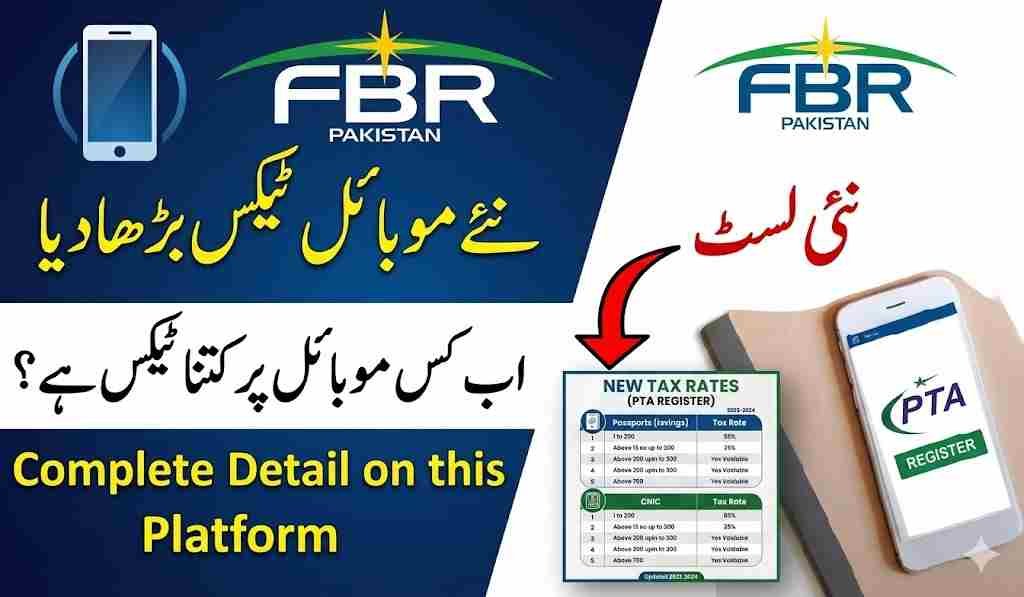
Here’s what matters: PTA does not “charge” this tax. PTA provides the DIRBS registration system, but duties and taxes are assessed and collected by FBR. PTA itself has publicly clarified this point.
This updated 2026 guide explains what you actually pay, why it changes, and how to register the right way without getting trapped by rumors or agents.
What is the “PTA tax” everyone talks about?
In Pakistan, mobile networks work through compliance checks. If your phone’s IMEI is not compliant in the Device Identification, Registration and Blocking System (DIRBS), it gets blocked from local SIM networks.
So when people say “PTA tax,” they usually mean:
- Customs duty and related taxes
- Assessed through FBR
- Paid via a PSID (Payment Slip ID)
- Generated during DIRBS registration
PTA’s role is the system and verification. FBR’s role is money collection and tax rules.
What changed recently (the 2026 update you should know)
1) Used and refurbished phones got a valuation update
In January 2026, reporting showed FBR set new customs values for old/used phones, which can reduce the overall tax burden for many refurbished devices (including popular Apple and Samsung models).
Bottom line: the same model can cost less to approve in 2026 than it did earlier, especially if it’s treated as used/refurbished under updated valuation.
2) Government discussions about new duties are active again
In February 2026, business reporting indicated the government was considering a 20% federal excise duty (FED) on CBU new mobile phones as part of a manufacturing framework discussion. Treat this as “policy under consideration” unless/until officially notified.
3) Sales tax structure on imported phones remains a major factor
A major update from Finance Act 2024 was widely reported as 25% sales tax on CBU imports above $500, with other slabs for different categories. This continues to shape the “why is it so expensive” conversation into 2026.
Why the tax amount is different for every person and phone
People expect a fixed list. In reality, the payable amount depends on several moving parts:
- Your phone’s declared/customs value (new vs used vs refurbished valuation)
- Model category and price bracket (especially high-end devices)
- CNIC vs Passport registration choice (rates often differ)
- Exchange rate impact at the time of assessment
- Whether it’s brought as baggage, gifted, or imported commercially
That’s why “my friend paid less on the same iPhone” happens all the time.
The legal way to register a phone in Pakistan (DIRBS method)
Here’s the clean process. No agent needed.
Step 1: Find your IMEI
Dial: *#06#
You’ll see IMEI(s). Dual SIM phones show two IMEIs.
Step 2: Apply in DIRBS Device Registration System (DRS)
Use PTA’s DIRBS/DRS portal (official). You submit IMEI and basic info and proceed for registration.
Step 3: PSID is generated for payment
Once your application is processed, FBR generates a PSID and the payable amount. PSID is essentially your payment reference.
Step 4: Pay PSID within validity window
PTA’s DRS guidance states PSID-generated duties/taxes can be paid through banking channels (online banking, ATM, or bank branch) and are time-bound.
Step 5: Your device becomes compliant after confirmation
After payment, DIRBS updates status and the phone works normally on local networks.
Bringing a phone from abroad: what travelers should know
A lot of confusion comes from baggage-rule rumors. Here’s the practical truth:
- If you bring a phone from abroad, you still need DIRBS compliance to use it on Pakistani SIM networks
- “One phone allowed” vs “two phones allowed” has been debated and revised in different policy moments
- In late 2024 there was public controversy around draft changes (including a $1200 “commercial quantity” concept), followed by clarifications and withdrawals
That matters because people still share old clips as if they are current.
If you’re traveling, your safest move is simple:
Assume you must register any additional/new device you intend to use in Pakistan, and use DIRBS to generate the correct PSID amount instead of guessing.
Common mistakes that cost people money
Paying “random PTA tax lists” from social media
Tax lists go stale fast. Valuations and policies change. Use DIRBS to generate the real PSID.
Using the wrong identity option
People select CNIC when passport would have been cheaper (or vice versa). Always compare before submitting if the system allows.
Registering late and losing time
If you wait until the phone blocks, you lose days. Register early.
Buying “factory unlocked” phones without checking compliance
Unlocked is not the same as compliant. Always verify IMEI and PTA/DIRBS status before paying full price.
Quick reality check: why taxes feel high
Pakistan’s mobile taxation is built around revenue and import control. Recent reporting and parliamentary discussion has repeatedly highlighted how smartphone taxes raise consumer cost, especially for mid to high-end models.
At the same time, the government is also pushing for local manufacturing and structured import frameworks, which is why you keep seeing “new duties may come” news cycles.
FAQs
Is PTA taking this money?
No. PTA provides DIRBS registration support. Taxes/duties are imposed and collected by FBR and deposited with FBR.
Can I pay without visiting any office?
In most cases, yes. The system generates PSID and you can pay via standard banking channels.
Why do refurbished phones sometimes cost less to approve in 2026?
Because customs valuation for used/old devices was updated, and reporting indicated lower valuation can reduce overall tax.
Are new taxes confirmed for 2026?
There are credible reports of proposals and policy discussions (like a 20% FED on CBU phones), but final confirmation depends on official notifications.
Final takeaway
If you remember only one thing, make it this:
Don’t rely on old tax tables. Don’t trust WhatsApp screenshots.
Use DIRBS/DRS, generate the PSID, and pay the amount that the system calculates under current FBR rules.

Muhammad Nawaz is the founder and editor of Biseworld.com, leading the platform since 2012. He writes and reviews authoritative content on bonds, telecom, prices, and official updates, ensuring factual accuracy and editorial accountability.